Drop a Dime

Drop a dime

What was said? He’s just “dropping dimes!”

Did someone really say that? Yes, my husband announced it as we were watching NBA finals back in June (sorry for the post delay!)

What does it mean? In the basketball context above, it means to “assist,” meaning to assist another player in scoring (passed the ball, helped the other teammate score, etc.).

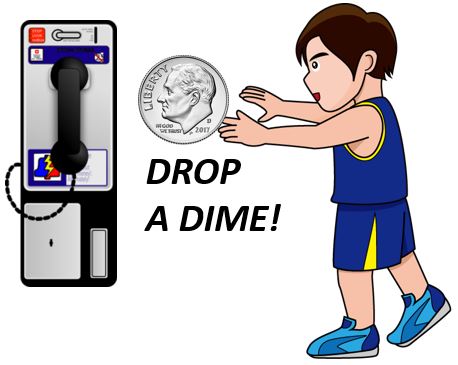
Origin:  The phrase originates back to the 40’s or 50’s and refers to making a phone call at a payphone where the price of a call was 10 cents. The call though, was typically made by a police informant who would literally “drop a dime” to make the call and snitch on someone / “assist” the police in their detective work of catching criminals.

There are other phrases with the term “dime” such as “stopping on a dime,” and “at the drop of a dime,” both referring to precision, speed & accuracy and can be used for basketball as well.

Next time you are watching basketball on TV, listen closely and you may hear an announcer say that a player has “dropped a dime!”

Sources:
https://www.urbandictionary.com/define.php?term=drop%20a%20dime
https://www.quora.com/What-is-the-history-of-the-slang-term-Dropped-a-dime
https://wordcounter.net/blog/2016/03/07/101271_what-is-a-dime-basketball.html

REFERRALS:  Do you LOVE Rema’s Idiom Blog and look forward to it all the time?
If so, refer your friends!

——————————————————————————————————————
You are currently subscribed to: “Making Heads or Tails of Idioms” To unsubscribe, follow the instructions. If you unsubscribe, please know that you will be disliked.
Give ’em Hell Harry

Give em hell

What was said? Give ’em hell Harry!

Did someone really say that? Yes, on Shark Tank, Lori Greiner (Queen of QVC) said it to an entrepreneur who was responding to pestering questions by Mark Cuban.

What does it mean? It means to respond to something bluntly or in a straight-forward manner (potentially on the “attack”).

Origin: It refers back to an incident in the 1948 US presidential election campaign where Harry S. Truman delivered a speech during his whistle-stop campaign. He visited multiple states all by train with a platform at the rear of the train where he delivered his speeches.  During his speech attacking Republicans in Harrisburg, IL, a supporter yelled “Give ‘em Hell, Harry!” and Truman responded “I don’t give them Hell. I just tell the truth about them and they think it’s Hell.” Since then, the term “Give ‘em Hell, Harry!” was used as a slogan for supporters of Truman.

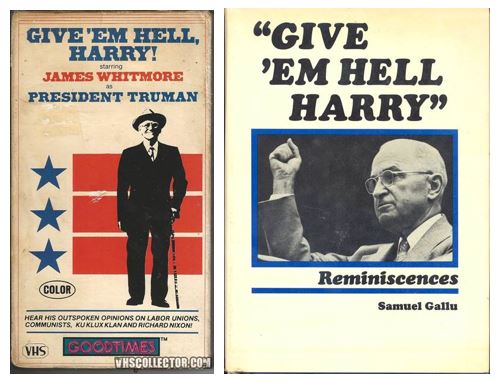
This is also the name of a biographical play and the 1975 film written by Samuel Gallu. These both feature a one-man show about President Harry S. Truman. The play’s debut was hosted by Truman’s daughter Margaret and attended by President Gerald Ford. James Whitmore starred in the play and was nominated for Best Actor by the Academy Awards and Golden Globes and he won a Grammy Award for Best Spoken Word Recording.

Sources:
https://en.wikipedia.org/wiki/Give_’em_Hell,_Harry!
https://idiomation.wordpress.com/tag/give-em-hell-harry/
https://epiac1216.wordpress.com/2010/11/19/quotes-give-em-hell-harry/

REFERRALS:  Do you LOVE Rema’s Idiom Blog and look forward to it all the time? If so, refer your friends!

——————————————————————————————————————
You are currently subscribed to: “Making Heads or Tails of Idioms” To unsubscribe, follow the instructions. If you unsubscribe, please know that you will be disliked.
Up the River

uptheriver

What was said? That the word on the street is the Pediatric chief is “up the river””

Did someone really say that? Dr. Minnick on Grey’s Anatomy (yes, I shamefully still watch it) insensitively said it on Season 13, Episode 11 about Dr. Alex Karev.

What does it mean? It means to be in prison / incarcerated or be sent to prison.

Origin: It appears to be first used in 1981 and originates from the fact that convicts from NYC would be sent up the Hudson River to Ossining State Prison (known as “Sing Sing”).

If you were a serious criminal, you were sent to Sing Sing “up the river” as opposed to the run of the mill pickpockets or those who committed minor offenses who stayed in more local prisons. Now the term has come to apply to anyone sent to any prison.

Up the River is also a 1930 comedy movie about escaped convicts, directed by John Ford and starring Spence Tracy and Humphrey Bogart in their feature film debuts.

“Up the river” should not be confused with being sold “down the river,” meaning to be deceived and originates from the Civil War era sending Northern slaves down the river to work on cotton plantations.

Sources:
http://www.urbandictionary.com/define.php? term=up%20the%20river
http://stuffnobodycaresabout.com/2012/05/27/where-did-the-saying-up-the-river-come- from/
https://en.wikipedia.org/wiki/Up_the_River
http://idioms.thefreedictionary.com/up+the+river

REFERRALS:  Do you LOVE Rema’s Idiom Blog and look forward to it all the time? If so, refer your friends!

Rope-A-Dope

What was said? “We’ll just Rope-A-Dope until the change comes through.”

Did someone really say that? Yes, at a meeting when discussing upcoming changes to a marketing program and how the program will be affected (if at all).

What does it mean? Basically, in this context, the plan was to “lay low” or resume business as usual until the change to the program actually happens.

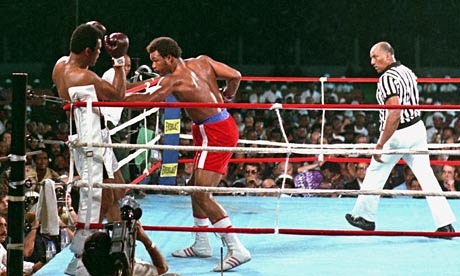
Origin: The term originated in the 1970s and refers to a move by Muhammad Ali, and his tactic in a boxing match with George Foreman in the infamous “Rumble in the Jungle” match. Foreman was favored to win and during the fight, Ali purposely provoked Foreman into attacking and forcing him with his back on the ropes.  The tactic allows the boxer (in this case Ali) to take a protected stance and allow the blow of the punches from Foreman to be absorbed by the ropes and not just his body so he can prepare for a counter-attack. The idea to use the move by Ali was apparently suggested to him by boxing photographer George Kalinsky who told him: “Why don’t you try something like that? Sort of a dope on the ropes, letting Foreman swing away but, like in the picture, hit nothing but air.” Some believe that Muhammad Ali coined the phrase, and others that publicist John Condon polished the phrase into “rope-a-dope” (originally known as “the turtle”).

 In business, or non-boxing setting, the term has come to be used as a “rope-a-dope” strategy referring to any strategy where an apparent “losing” or passive, not aggressive position is assumed in the hope of eventual victory – so in the case above, staying the course of action allows us to win in the end when changes hit the program !

Sources:
https://en.wikipedia.org/wiki/Rope-a-dope
http://www.yourdictionary.com/rope-a-dope
http://www.thefreedictionary.com/rope-a-dope
http://en.espn.co.uk/onthisday/sport/story/319.html
https://www.britannica.com/biography/Muhammad-Ali-boxer#ref1133296

REFERRALS:  Do you LOVE Rema’s Idiom Blog and look forward to it all the time? If so, refer your friends!

Oh My Stars (and Garters)!

VS OhMyStars

What was said? “OH MY STARS”

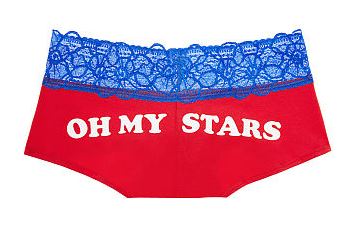
Did someone really say that? It’s printed on the backside of a pair of women underwear at Victoria Secret (which I know now thanks to a present from my friend Lindsay!)

What does it mean? In a nutshell, a comedic expression of surprise / shock.

Origin: In 1593, Christopher Marlowe used the expression without the “garter” in a play The Troublesome Raigne and Lamentable Death of Edward the Second: “O my stares! Why do you lower (bring down in rank) unkindly on a king?” The stars in question refer to the astrological stars and one’s disposition in life.

In the 19th century, the expression began to be used in a lighter, more comedic expression to signify surprise. There are other versions, however.

The expression is believed to have also began in the UK as “oh my stars and garters” and refers to honors and awards received as achievements (not referring to the astrological stars). For instance, there was a “Noble Order of the Garter” which was the highest order in the English knighthood founded by Edward III in 1344. This chivalrous medal was in the form of a star like many other medals in Britain. Stars and Garters became the generic name referring to the medals to the group of individuals who had them. The earliest written reference of the phrase was in Alexander Pope’s “The Rape of the Lock” in 1712: “While Peers, and Dukes, and all their sweeping train, And Garters, Stars and Coronets appear.”

 Other expressions that are very similar with “stars” in mind: Bless my stars and Thank my lucky stars! Other expressions that lightly tread upon surprise / astonishment: By golly, Oh my!, Oh my gosh, My My, Dear Me, Crikey!

Sources:
http://www.merriam-webster.com/dictionary/Hobson’s%20choice
http://www.phrases.org.uk/meanings/hobsons-choice.html
https://en.wikipedia.org/wiki/Hobson%27s_choice
https://en.wikipedia.org/wiki/Morton%27s_fork
http://tvtropes.org/pmwiki/pmwiki.php/Main/MortonsFork

REFERRALS:  Do you LOVE Rema’s Idiom Blog and look forward to it all the time? If so, refer your friends!

Hobson’s Choice

take it or leave itWhat was said? “What is it when there’s no right answer to the question? A Hobson’s Choice?”

Did someone really say that? Yes, at work the other day, when presented with two options, neither being good ones, a coworker asked that question aloud…

What does it mean? It actually means a question where really only one option is offered, so you have to “take it or leave it” so to speak. It gives a false illusion of a “choice.”

Origin: The story goes that a Thomas Hobson (1544–1631) ran a carrier and horse rental business in Cambridge, England, where he rented out horses but refused to hire them out other than in the order he chose. The choice he gave his customers was ‘this or none’; quite literally, meaning not their choice but Hobson’s choice.

A well known “Hobson’s choice” was Henry Ford’s offer of the Model-T, “you can pick any color, as long it’s black!”  The expression is best known in the UK, but became used worldwide following the successful eponymous 1954 film starring Charles Laughton.

NOTE: I believe the use of “Hobson’s Choice” when I first heard it was not accurate, it was more of a “Morton’s Fork” which is being presented with two equivalent choices in which contradictory arguments lead to the same conclusion.

Sources:

http://www.merriam-webster.com/dictionary/Hobson’s%20choice
http://www.phrases.org.uk/meanings/hobsons-choice.html
https://en.wikipedia.org/wiki/Hobson%27s_choice
https://en.wikipedia.org/wiki/Morton%27s_fork
http://tvtropes.org/pmwiki/pmwiki.php/Main/MortonsFork

REFERRALS:  Do you LOVE Rema’s Idiom Blog and look forward to it all the time? If so, refer your friends!

Goose Egg & Lay an Egg

What was said? “When you look at the program results, all you see is “goose egg, goose egg, goose egg!”

Did someone really say that? Yes, last week when discussing how many program incentives a customer is claiming.

What does it mean? It means a big ZERO! Zilch, zip, nada.

Origin: Throughout my search, it seems that the majority of “goose egg” references is in the world of sports. Referencing a scoreboard and seeing the number zero that has a similar “look” as a round, elongated egg of a goose. Sample scoreboard references: “The home team got a big goose egg on the scoreboard,” or “At the end of the game there was nothing but goose eggs next to our name,” and even used as a verb sometimes “I played a tennis match and was goosegged, I lost 6-0, 6-0, 6-0.” Some believe that the term is an Americanization of the British term “duck’s egg” and that even that originated through sports – in 1870, in a game of cricket, a “duck’s egg” denoted a score of zero; and around the same time in baseball, the “goose egg” reference came alive. In tennis, a score of zero is known as “Love” in the USA, which “sounds” like the original French term for the score “l’ouef” which means… you guessed it – an egg!

To lay an egg is another expression that also means to flop, fail and to not score and apparently has no connection to a hen/goose/duck actually laying an egg. So in summary, not scoring is to “lay an egg” with a resulting “goose egg” on the scoreboard simply because the Arabic numeral “0” zero resembles an egg. Super scientific!

Gooseegg

Sources:

http://www.urbandictionary.com/define.php?term=goose+egg
http://idioms.thefreedictionary.com/goose+egg
http://english.stackexchange.com/questions/5516/origin-and-meaning-of-lay-an-egg
http://dictionary.reference.com/browse/lay+an+egg

REFERRALS:  Do you LOVE Rema’s Idiom Blog and look forward to it all the time? If so, refer your friends!

It’s a Real Doozy

What was said? “It’s a real doozy!!”

Did someone really say that? Yes, at my nephew’s birthday party, a friend said that when discussing citric powder used in middle eastern cuisine.

What does it mean? To call something/someone a “doozy”, is to suggest it is extraordinary, one of a kind, remarkable or even bizarre. It is used both positively (as in the example above), and also at times to describe something that is troublesome or even difficult.

Origin: Sometimes spelled Doozy, Doozie, Doosie, Doosey, Duesey… there are a few of beliefs on where the expression originated.

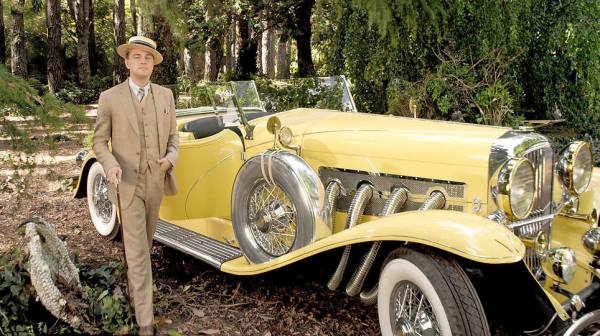
1. A car!!  Beginning in 1921, during the Great Depression, two German-born brothers, the Duesenbergs, hand-crafted a luxury, american-made automobile line named after them. The vehicle was FAST (later model years winning Indy 500’s and the French Grand Prix) and EXPENSIVE (owned by the rich and famous). It came to be known as a “Duesey” and is one belief as to where the expression originated. NOTE: You may recognize it from the Great Gatsby movie with Leonardo DiCaprio (pictured below is a 1929 Duesenberg Model J, worth over $3 Million)

2. A Flower! Back in the 18th century, calling something a “daisy” was to call it great. The phrase made it’s way from England to North America, and appeared in print in 1836, in Thomas Chandler Haliburton’s The Clockmaker: “I raised a four year old colt once, half blood, a perfect picture of a horse, and a genuine clipper, could gallop like the wind; a real daisy, a perfect doll, had an eye like a weasel, and nostrils like Commodore Rodgers’s speakin’ trumpet”.

3. An Actress! Eleonora Duse, a famous Italian-born actress from the 19th century who spent time in the US and was greatly admired by President Cleveland and his wife, was commonly referred to as “Duse.” It is believed that this nickname, in combination with the “Daisy” origin, created the saying “Doozy.”

Sources:

http://www.merriam-webster.com/dictionary/doozy
http://www.worldwidewords.org/qa/qa-doo2.htm
http://www.urbandictionary.com/define.php?term=doozy
http://superbeefy.com/what-does-the-expression-a-real-doozy-mean-and-where-did-the-word-doozy-come-from/
http://classiccars.about.com/od/classiccarsaz/a/Duesenberg.htm
http://articles.latimes.com/2013/may/14/autos/la-fi-hy-autos-the-true-cars-of-the-great-gatsby-era-20130513
http://www.motorauthority.com/news/1065506_leonardo-dicaprio-drives-3-million-duesenberg-for-great-gatsby-role

REFERRALS:  Do you LOVE Rema’s Idiom Blog and look forward to it all the time? If so, refer your friends!

Shrinking Violet

What was said? “I’m no shrinking violet. I’ll tell him exactly how I see it!”

Did someone really say that? Yes, when in northern Michigan, a friend said that about another friend and his idiosyncrasies.

What does it mean? Shrinking violet refers to a shy or modest individual, so in the case above, my friend was saying that she was in fact the opposite – more outspoken and outgoing.

Origin:

Most sources say that the phrase originated in the UK and refers to the violet flower, from the Viola family of flowers, which also includes pansies. The violet flower in the UK was known as a reclusive and understated flower, that is modest in nature because it grows close to the ground, is quite dainty and its flowers are sometimes hidden in its leaves and by nearby shrubs. A poetry magazine, The Indicator, contains what many believe was the first written instance of the saying from Leigh Hunt, published in 1820:

There was the buttercup, struggling from a white to a dirty yellow; and a faint-coloured poppy; and here and there by the thorny underwood a shrinking violet.

In the USA, the figurative use of the term describing individuals as shy/modest is most common. Also, there are two more commercial uses for the term:

  1. Weight loss wrap titled “shrinking violet” helping women “shrink a size”
  2. Book series for young girls where a “shrinking violet” is the main character and has many adventures making her go from normal to mini-me from time to time

Sources:
http://www.phrases.org.uk/meanings/shrinking-violet.html
http://www.worldwidewords.org/qa/qa-shr2.htm

REFERRALS:  Do you LOVE Rema’s Idiom Blog and look forward to it all the time? If so, refer your friends!

What’s the Beef?

What was said? “What’s the Beef?”

Did someone really say that? Yes, Jimmy Fallon has a segment on the Tonight Show called “What’s the Beef?” where he creates fictional fights between famous actors. I was watching with my parents and they were naturally questioning… “why beef?”

What does it mean? It means to have a problem or issue with someone or something, so in the context above, “what’s the issue/argument all about?”

Origin:

There are many ideas as to where this phrase started… all the way from it originating from rap songs signifying that when someone has “beef” with you, it ends up with a street fight where your face could get so banged up that it resembles ground beef, all the way to having to do with cow ownership and “beefy” situations:

  • The phrase “I have a beef with you” originated in the old west among sheep farmers who were competing for grazing land with cattle farmers. The sheep farmers used the term with each other to refer to a conflict, which was what they had with the cattle farmers, or “beef” farmers (answers.com)
  • Having to do with the ownership of cows and “cow feuds” which resulted as owners argued over the best interests of the cow and typically the cow got slaughtered and led to owners having “beef” with one another (10poundhammer blog)
  • First appearing in the U.S. during the late 1800s, “beef” describes a situation or complaint that might well escalate into a “beefy” muscular conflict (Word Detective)

So it seems, that there is not one origin for the phrase, but either way, Jimmy’s segment will make a lot more sense now!

Jimmy Fallon's "What the Beef?" Segment - Click to Play!
Jimmy Fallon’s “What the Beef?” Segment – Click to Play!

REFERRALS:  Do you LOVE Rema’s Idiom Blog and look forward to it all the time? If so, refer your friends!

Website Powered by WordPress.com.

Up ↑